Entrepreneurship

I’m currently the CEO and chairman of the Swiss Clinics Group which is a small network of boutique medical clinics in Switzerland committed to delivering the highest standard of care.
I also serve as CEO of Paracelsus Recovery, a mental health clinic I founded with my parents. What started as a family vision has grown into one of the most recognised centres for ultra-personalised treatment worldwide.
Together, we developed what’s now known as the “one client at a time” model which is a 360° approach to mental health that focuses entirely on the individual. At the time, it was a radical shift from traditional treatment models. Now, it’s being adopted around the world.

We created Paracelsus Recovery to serve a group that is often misunderstood and stigmatised: ultra-wealthy individuals dealing with complex mental health and dependency issues. Despite external appearances, many face deep isolation, pressure, and pain and we wanted to offer a space that met those realities with compassion and discretion.
Alongside my clinical work, I’m involved in the start-up and real estate world through my investment companies, including Panacea Capital. Over the years, I’ve founded or co-founded several businesses. Some have succeeded, others haven’t. But every one of them has taught me something valuable.
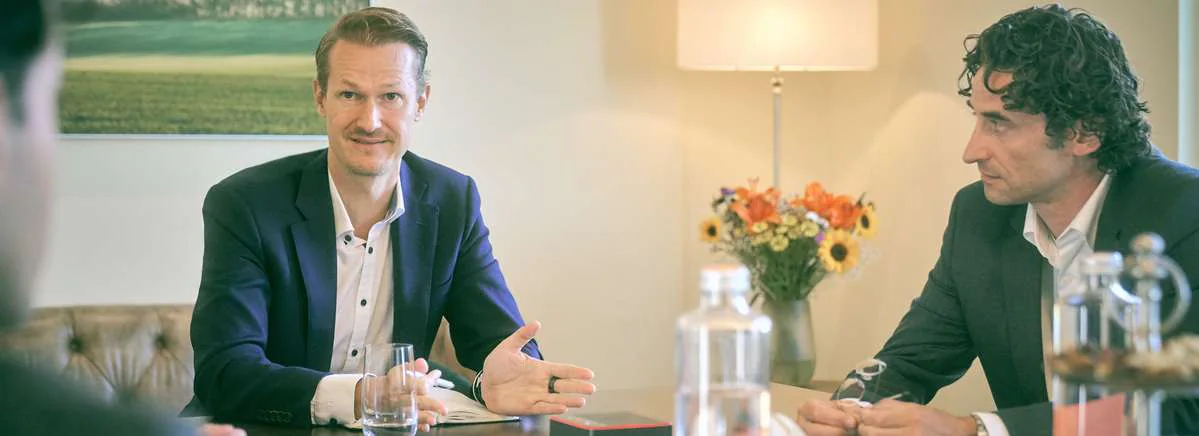
What matters most to me in any venture is the people. I’ve learned that when you invest in people (your clients, your colleagues, your team) everything else follows. Each of my organisations is built on three core pillars: a commitment to excellence, a commitment to client-centred care, and a commitment to the team that makes it all possible. When those pillars are in place, I’ve seen just how resilient and impactful a business can become.

What inspired you to start Paracelsus Recovery?
It all started in 2009 when my parents and I supported a close friend who was struggling with alcohol dependency. Instead of sending him to a clinic, we created a personalised care setup that included an apartment, a team of experts, and support tailored just for him. It worked incredibly well. That experience showed us just how powerful one-to-one, fully bespoke treatment could be.
When I founded Paracelsus Recovery in 2013, the goal was to offer the same level of care to those who can’t safely access traditional treatment centres due to their public roles. For someone leading a major global company, discretion isn’t just a preference, it’s a necessity. Our one-client-at-a-time model was designed to meet that need with integrity and compassion.
How would you describe your leadership style?
I’d say I lead with humanistic pragmatism. For me, that means balancing empathy with outcomes i.e., doing what works, but always with the human experience at the centre. At Paracelsus Recovery, everything we do is built around individual care, discretion, and real-world effectiveness. We don’t follow rigid ideologies; we focus on what genuinely helps each person heal.
What are some of the challenges you’ve faced along the way?
Building something new, especially something so personal and different, was never going to be easy. When we introduced the concept of one-to-one, luxury mental health care, it was unfamiliar to many, and often misunderstood.
We had to work hard to earn trust, especially in a space where people have had difficult or even damaging experiences with other centres. Then the pandemic hit, and like so many businesses, we were pushed to the edge. But perhaps the hardest part has been distancing ourselves from the unethical “luxury” providers that started copying our model. Standing firm in our values and letting our results speak for themselves has been the way through.
What does Paracelsus Recovery specialise in?
We offer fully tailored mental health treatment, focusing on the individual rather than the diagnosis. Using our 360-degree approach, we treat everything from depression, anxiety, trauma, and burnout to dependency issues, personality disorders, and behavioural addictions.
We also provide world-leading health assessments and support for chronic conditions like autoimmune disease, long COVID, chronic pain, and post-cancer recovery.
Alongside that, we’ve developed specialised programmes for complex, wealth-specific issues such as stalker trauma, sudden wealth syndrome, and more. We’re also at the forefront of psychedelic-assisted psychotherapy and currently offer ketamine-assisted treatment where appropriate.
How do you decide when to evolve or expand your services?
I strongly believe that our size is naturally limited. If we expanded to more clients we'd have to replicate the whole organisation. We could not deliver the personal, compassionate and passionate services we do to a bigger number of parallel clients. The way we constantly "expand" is by always adopting the latest (proven and legal) technologies and treatment modalities.
Those kinds of expansions always start with listening to our clients, our team, and the changing world around us. If we notice recurring patterns of unmet need, we build something around it. That might be a new programme, a new approach, or a new modality.
We also stay very close to emerging research and best practices in the field. If something has real evidence behind it and aligns with our values, we explore how to integrate it. Ultimately, it’s not about what we can sell. It’s about what our clients truly need to get better.