Who I am

If you looked at my CV, you might see someone who has, at least on paper, ‘succeeded’. I hold a master’s degree in Accounting and Finance from the London School of Economics. I’ve founded and managed clinics across Europe (The Kusnacht Practice, The Richemont Clinic, The Gentlemen’s Clinic, The Vienna Recovery, and Paracelsus Recovery to name a few). I’m the CEO and chairman of Swiss Clinics Group, and I’ve invested in countless startups focused on innovation in real estate and healthcare. On paper, it sounds like a linear textbook case of someone who ‘figured it out’ and did it ‘right’, but in reality, my life and my work has been a far messier, and my experience of that work far more painful than any ‘success story’ might show.

My real life’s work didn’t come from investments, institutions or grit. It came from being brought to my knees. Again and again.
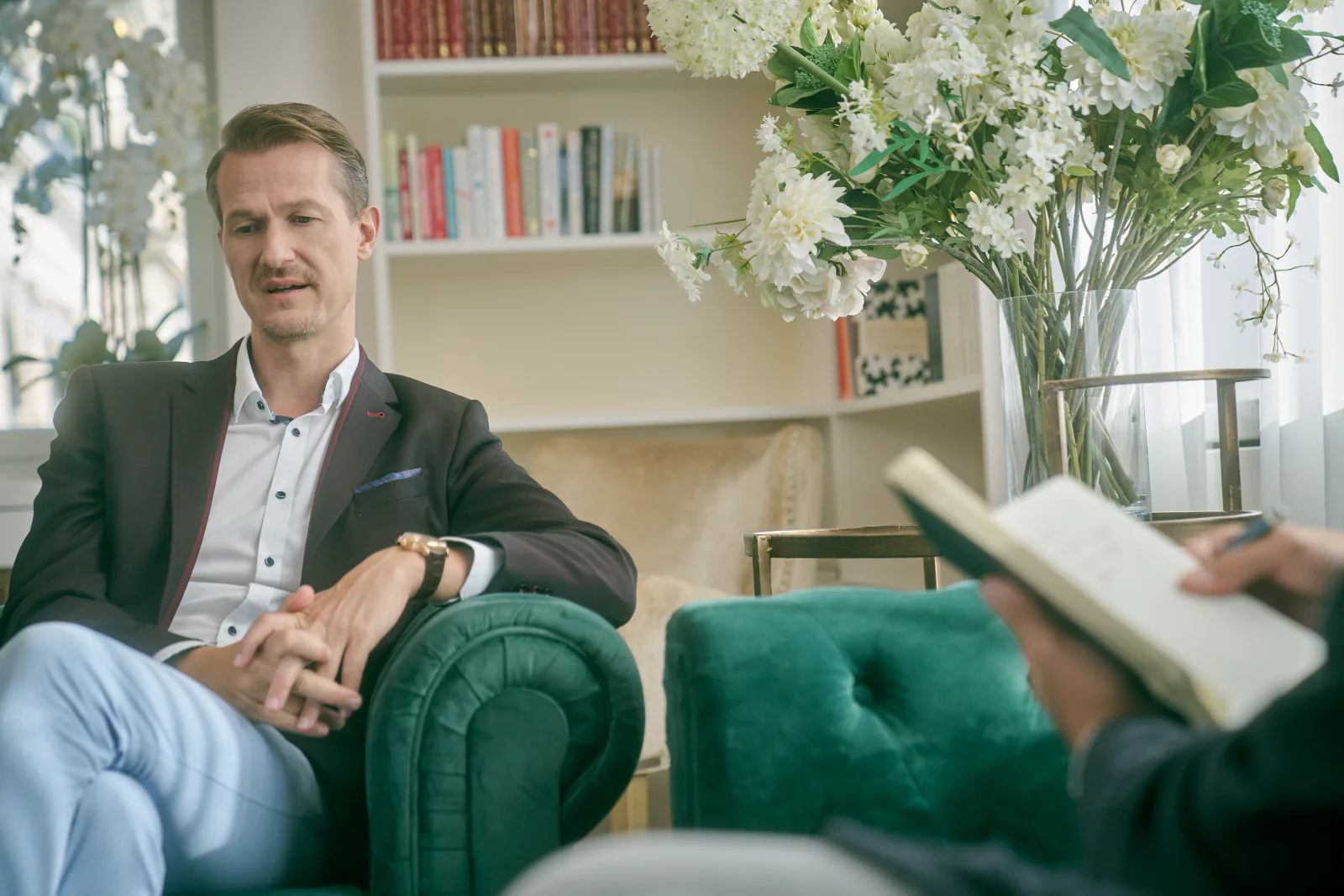
At first, I was drawn to entrepreneurship because I believed it could deliver financial, personal, even existential freedom. In the beginning it did, to some extent. However, over the years, I began to notice that the more I built externally, the more disconnected I became internally. I could lead teams, negotiate deals, launch clinics and still feel like I couldn’t bear who I was, like I couldn’t live in my own skin. I kept thinking when would this end? When would I achieve enough that I’d no longer feel like a kid in a trench-coat pretending I knew what I was doing? I had everything I’d ever wanted, how could I still be this insecure? This miserable? I decided that there must be something profoundly ‘wrong’ with me. That I am, in fact, truly a ‘bad person.’ Success wasn’t only failing to settle that deeper ache, it was magnifying it.
Then, amidst this turmoil, I started to make mistakes. I failed publicly and painfully. I made bad decisions, trusted the wrong people, tried to build when I should have stepped back. As a result, I hit burnout and tried to ignore it as I watched things I poured my soul into collapse.
Then, after a quite severe (and almost inevitable) period of depression, I realised I wasn’t building to create but to compensate. I thought that if I ‘made it’ I wouldn’t have to ever face who I was. Instead, I could hide behind my success. While all those issues I thought success would shield me from (from trust issues to self esteem problems) took a long time to confront, but once I finally did, everything began to shift. Slowly, imperfectly, and with a lot of pain, but things began to move.

And through it all, I learnt something no MBA can ever teach you: failure isn’t the opposite of success, it’s actually its doorway. That’s the thing no one tells you when you start out: the hardest part of building something meaningful is that it will eventually ask you to rebuild yourself. Again and again, with a kind of brutal honesty that you sometimes fear you can’t survive.
However, when you do, because you will, its that honesty that sets you free and enables you to create in a completely new way.
For instance, today, I still build, but I do so with a different compass. What drives me now is not growth for its own sake, but depth and honesty. I bring my most vulnerable self to the forefront of everything I do. Because of this, my focus shifted. I now create spaces in business, mental health, and conversation where we can tell the truth about what it means to be human. Especially when we’re supposed to have it all together.
At Paracelsus Recovery, I’ve created a clinic that reflects this ethos: one client at a time, deeply personalised, radically human. The work isn’t about fixing people. It’s about creating enough safety for them to face themselves. I care deeply about how wealth impacts mental health not just because I’ve studied it, but because I’ve lived it. There’s a loneliness that comes with success, a shame that few feel they’re allowed to speak about. We assume the wealthy have no right to suffer. But pain doesn’t discriminate. If anything, wealth often cloaks the wounds more tightly. I’ve sat with people society calls powerful and seen how afraid they are to say, I’m not okay. I’ve been one of them.
That’s why I speak openly about the mental health struggles of high-performing individuals, and why I’ve committed my life to dismantling the illusion that external achievement protects us from inner collapse. It doesn’t.
I’ve learned that compassion for others and for ourselves is not a soft virtue. It is survival. It’s what got me through my own breakdown in 2022, when burnout finally caught up with me and I had to stop pretending I was fine. Outside of work, I return to music, nature, and fatherhood as forms of restoration. Playing piano in the evening is my meditation - the place where my mind quiets. Long walks in the forest, time with my son, and moments of stillness are where I find the kind of wealth I was searching for all along.